



In today’s hyper-competitive global marketplace, innovation is not merely an advantage—it is a necessity. Organizations across industries are under constant pressure to deliver better products, faster services, and more efficient operations. Among the world’s most innovative companies, Huawei stands out as a model of sustained technological advancement and operational excellence. A key driver behind Huawei’s success lies in its rigorous use of benchmarking best practices. By systematically analyzing internal and external performance metrics, Huawei identifies gaps, sets ambitious goals, and drives continuous innovation. This approach offers valuable lessons for organizations seeking to foster a culture of innovation through strategic benchmarking.
At its core, benchmarking is the process of comparing business processes, performance metrics, and outcomes against industry leaders or best-in-class performers. Huawei elevates this practice beyond simple comparison by embedding it into every level of its organizational DNA. The company uses benchmarking not just to measure performance but as a strategic tool to inspire breakthrough thinking and accelerate R&D cycles. One of Huawei’s foundational principles is that no single entity has all the answers—innovation often comes from understanding how others solve similar problems more effectively.
Huawei begins its benchmarking journey by identifying critical performance indicators (KPIs) across functions such as product development, supply chain efficiency, customer satisfaction, and time-to-market. These KPIs are then compared with those of leading competitors and global innovators, both within and outside the telecommunications sector. For example, when developing next-generation 5G infrastructure, Huawei studied not only rival telecom equipment manufacturers but also high-performance firms in aerospace and automotive industries known for precision engineering and rapid prototyping. This cross-industry benchmarking allows Huawei to adopt best practices from diverse domains, fostering disruptive innovation rather than incremental improvement.
A defining feature of Huawei’s benchmarking strategy is its emphasis on process rather than just outcomes. While many companies focus solely on end results—such as speed or cost—Huawei digs deeper into the underlying workflows, decision-making structures, and cultural enablers that drive those results. For instance, when benchmarking software development velocity, Huawei examines agile methodologies, team autonomy, and feedback loops used by top tech firms. It then adapts these processes to fit its own organizational context, ensuring that improvements are sustainable and scalable.
Another hallmark of Huawei’s approach is its commitment to real-time data collection and analysis. The company leverages advanced analytics, artificial intelligence, and big data platforms to monitor performance continuously. This enables dynamic benchmarking, where insights are generated not just annually or quarterly, but in near real time. As a result, Huawei can respond swiftly to emerging trends, adjust R&D priorities, and reallocate resources to high-potential innovation areas. This agility has been instrumental in maintaining Huawei’s leadership in fields like optical networking and AI-powered enterprise solutions.
Crucially, Huawei ensures that benchmarking is not a siloed activity confined to a single department. Instead, it fosters a company-wide culture of learning and comparison. Cross-functional teams regularly engage in benchmarking exercises, sharing insights across R&D, marketing, manufacturing, and customer service units. This horizontal integration breaks down information silos and encourages collaborative problem-solving. Employees are encouraged to question existing practices, propose alternatives based on external benchmarks, and experiment with new approaches—all within a framework of disciplined measurement and evaluation.
Huawei also places strong emphasis on aspirational benchmarking—setting targets that exceed current industry standards. Rather than aiming to match competitors, Huawei seeks to surpass them. This mindset pushes teams to think creatively and invest in long-term, high-risk research projects. For example, Huawei’s investment in semiconductor design and proprietary operating systems emerged from benchmarking efforts that revealed overreliance on foreign technologies as a strategic vulnerability. By setting a bold goal of self-reliance, Huawei catalyzed internal innovation that might not have occurred under conventional competitive analysis.
To sustain innovation, Huawei integrates benchmarking with robust knowledge management systems. Insights gained from benchmarking are documented, categorized, and made accessible across the organization. Lessons learned from failed experiments are treated with the same importance as successful ones, reinforcing a culture of psychological safety and continuous learning. Moreover, Huawei regularly rotates engineers and managers across divisions and geographies, exposing them to different practices and perspectives—an internal form of benchmarking that stimulates fresh ideas.
For other organizations looking to emulate Huawei’s success, several key takeaways emerge. First, benchmarking must be strategic and aligned with long-term innovation goals, not just short-term performance fixes. Second, it should extend beyond direct competitors to include global leaders in unrelated industries. Third, data-driven insights must be coupled with cultural readiness to change. Finally, leadership must champion benchmarking as a continuous, organization-wide discipline rather than a one-off project.
In conclusion, Huawei’s benchmarking best practices offer a powerful blueprint for driving innovation in complex, fast-moving industries. By systematically measuring, learning from, and exceeding global standards, Huawei transforms benchmarking from a diagnostic tool into an engine of growth. Organizations that adopt a similarly holistic and aspirational approach can unlock new levels of creativity, efficiency, and market leadership. In the pursuit of innovation, the most valuable insights often come not from looking inward—but from seeing what others are achieving and daring to do better.
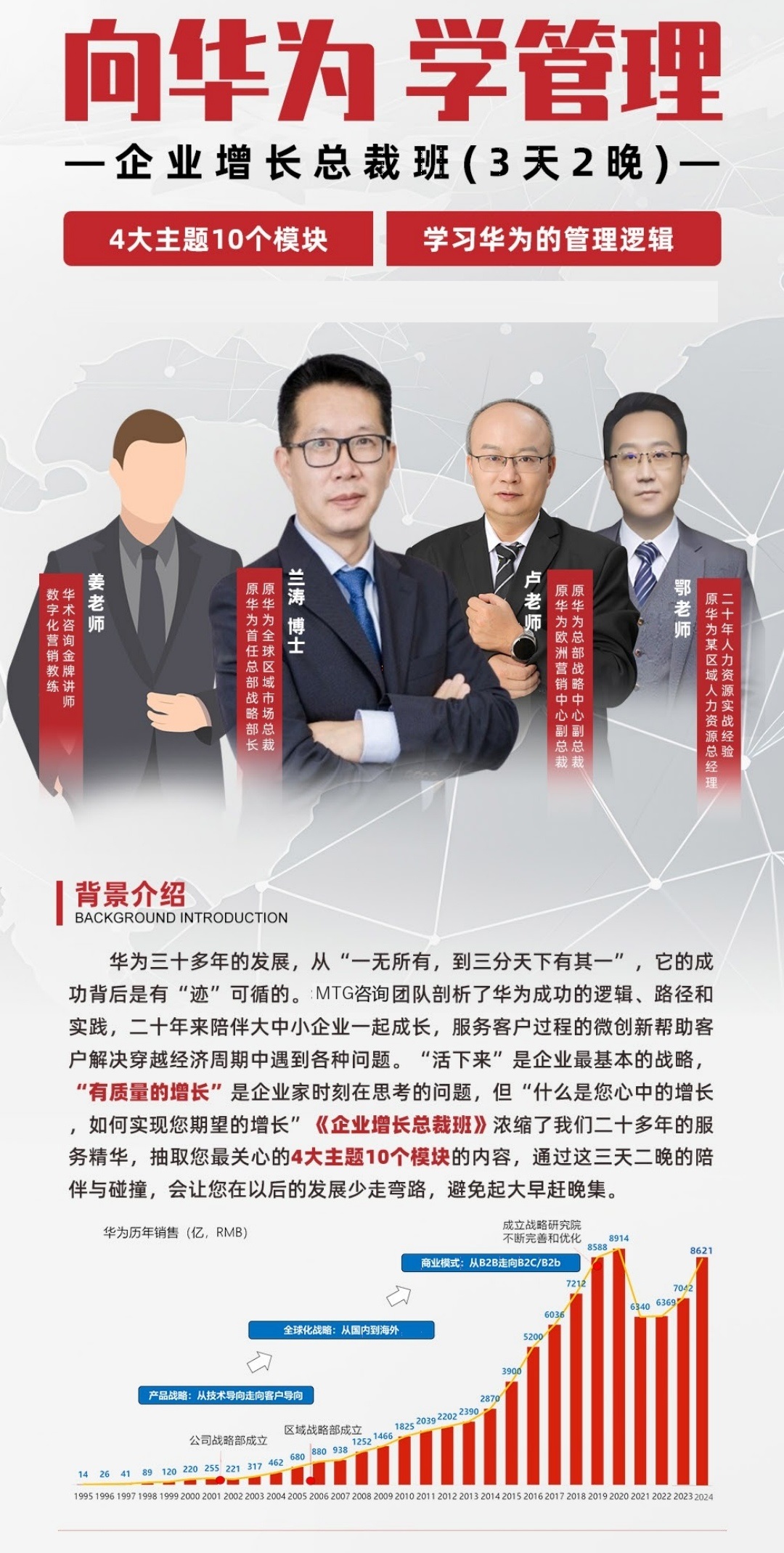
点击链接或者扫码注册就能赚钱,数字经济谁先注册,下线就为谁赚钱,介绍服务费
智谷AI名片 无需下载注册就送红包
抢占,卡位,抢占先机,抢开数字门店需要激活码,可以留言
想赚更多钱,想了解详情,请下载,或者留言,一对一沟通,或者参加培训

深圳市马市特吉科技有限责任公司 Copyright © 20024-2026
微信扫码添加我


